




Face mask mandates unlikely to violate civil rights

woman in face mask at work, civil rightsAmidst all the civil rights protests lately, one divisive topic has emerged: Is it a violation of my civil rights for the government to require me to wear a face mask in public? In short, probably not. Because of the rapid increase in Covid-19 infections, many states have issued temporary laws, requiring all citizens (over the age of 11, in Colorado) to wear face masks. In Colorado, it applies while “entering or moving within any public indoor space [or] while using or waiting to use public (buses, light-rail) or non-personal (taxis, car services, ride-shares) transportation services.” You aren’t required to wear them in private residences or when outdoors, unless you are waiting for public transportation. Given the public-available data on the Covid pandemic, face-mask orders probably bear a reasonable relationship to the emergency and are probably legal, based on pre-existing case law.


Does the government have the legal authority to mandate face masks?

Probably. Since we are in the middle of a public health emergency, state and local officials have the authority to issue and enforce reasonable rules of safety. According to Colorado Attorney General Phil Weiser, “This has been upheld repeatedly. No one has the right to expose the community to communicable disease.” Likewise, Colorado Governor Jared Polis has emergency powers that grant him the right to issue the face mask mandate, and that authority is upheld by the Colorado state constitution (Article IV, Section 2). A law passed by the legislature: Colorado Disaster Emergency Act, CRS 24-33.5-701 also supports this.

A state government’s power to issue orders that are reasonably related to the protection of other citizens during public health emergencies has also been upheld by the Supreme Court. This has been the case since 1905, when the Supreme Court ruled on Jacobson v. Massachusetts. The case involved a smallpox outbreak and local authorities mandated that everyone had to be vaccinated against it or risk a fine (unless medically unable to do so safely). The court upheld this authority, saying, “Upon the principle of self-defense, of paramount necessity, a community has the right to protect itself against an epidemic of disease which threatens the safety of its members.”

“The public health expert consensus is that wearing a mask in public is a key countermeasure in combating the coronavirus pandemic because it helps slow the infection rate. Even cloth face masks can help curb community spread of coronavirus, in part by reducing transmission by people who are infected but experience no symptoms. The coronavirus pandemic is the kind of extraordinary circumstance when the public good outweighs individual inconvenience.” (Law.com)

To date, over 500,000 Americans have died from Covid-19, so it is likely within each state government’s authority to mandate necessary requirements issued for the purpose of protecting the health and safety of those who have not yet been infected, so long as those requirements relate directly to the cause at hand. Since Covid-19 has been shown to be spread by people breathing out tiny droplets that may contain the virus, face masks are likely to be considered a reasonable precaution. Face mask requirements are even more likely to be considered reasonable considering that many people who have the virus are asymptomatic and may unknowingly spread it to others. To date, the Supreme Court has had the opportunity to revisit this issue, several times, but has declined in all but religious liberty cases, where certain government’s have been deemed to have applied face mask mandates inequitably to religious institutions and/or religious activates, as compared to similarly situated secular institutions/activities.


Can I be required to wear face mask if I have a medical condition?

For those people “who cannot medically tolerate a face covering,” the ADA (Americans with Disabilities Act) requires that businesses, government entities, etc. make reasonable accommodations. Those may include offering delivery or curb-side pickup of things like groceries and goods, or offering online options for accessing services such as renewing a license. However, they aren’t required to allow you in their space without a mask, as that could endanger others.

The definition for those medically exempt from the order is pretty narrow: “a person who has trouble breathing or anyone who is unconscious, incapacitated, or otherwise unable to remove the cloth face-covering without assistance.” It doesn’t include people who believe the mask will cause them to breathe in carbon dioxide or lower their oxygen levels.

The ADA has also issued a warning against using fake mask exemption cards that have flooded the internet. “The ADA does not provide a blanket exemption to people with disabilities from complying with legitimate safety requirements necessary for safe operations.” (ADA website)


gloves and disposable face mask, civil rights

Can a business refuse me entry if I won’t wear a mask?

Not only can a business refuse you entry, but they may be required to as they are responsible for upholding the state and local laws for face masks and other safety measures. Again, they have to make reasonable accommodations for those with disabilities, so if you suffer from a disability, you should be prepared to make a specific request for accommodation that will not create an undue burden on the business. But as long as the business is enforcing the mask requirement equally to everyone, they are probably not violating your rights. Businesses are also required to post signage stating that masks are required. If you attempt to enter a business without a mask, you could be subject to allegations of trespassing. Likewise, businesses that do not enforce the ordinance may lose their license.


Can my employer require me to wear face masks?

Because of the mandate, employers must require all employees to wear masks. They have to make reasonable accommodations for employees with disabilities and should offer protection to those at a greater risk of severe illness due to Covid-19. Some employers may require employees to wear additional protective gear, such as gloves, and some are required to per Public Health Order 20-31.

If you are in a job that requires specific high-end protective gear like N95 masks, employers in Colorado are required to provide them. For all other businesses, government entities, etc. the Safer at Home public health order from March states that employers shall “provide appropriate protective gear like gloves, masks, and face coverings.” The newest public health order states that employers “should” provide protective equipment, but doesn’t specifically mandate it.

Regardless, employers are still required to provide workplaces “free from recognized hazards likely to cause death or serious physical harm” under the Occupational Safety and Health Act’s General Duty Clause. This is interpreted differently for each business and can include things like putting up clear barriers to protect employees who come in close contact with the public.

Other resources on our blog:


Additional resources:

Face-Covering Requirements and the Constitution

Colorado Mask Order: When Do I Need To Wear A Face Covering? (And More Mask Questions Answered)

Questions & answers about the statewide mandatory mask order

Considerations for Wearing Cloth Face Coverings


Police accountability improving in Colorado

police pepper spray people at protest, police accountability

Colorado has one of the worst rates of police shootings in the country. And the record on police accountability is just as bad:

“In all but two of the 309 cases in six years, officers’ actions were legally justified by district attorneys or grand juries.”

On June 19, 2020, the Enhance Law Enforcement Integrity bill was signed into law in Colorado to help stem this tide and to respond to the dramatic protests that erupted in response to the death of George Floyd. The new law will add significant police accountability mechanisms for officers who engage in excessive force and other constitutional rights violations, and will enact other reforms to help weed out bad cops. Here are some of the most important pieces of the bill:

It will increase police transparency and accountability by requiring body cameras

On or before July 1, 2023, the bill requires all law enforcement agencies in the state of Colorado to wear and use body-worn cameras during interactions with everyday people.

A peace officer shall wear and activate a body-worn camera when responding to a call for service or during any interaction with the public initiated by the peace officer, when enforcing the law or investigating possible violations of the law.

Not only will all officers be required to wear body cameras, but those that do can face penalties for turning off or tampering with the cameras. Also, departments will be required to release footage within 21 days after a misconduct allegation. We highly recommend that you make complaints of misconduct with the Internal Affairs Division of any police agency who you believe may have committed misconduct.

The bill limits use of chokeholds

Any type of chokehold or carotid hold will be banned unless absolutely necessary, and only when dealing with violent offenses. Officers will not be allowed to use deadly force against anyone suspected of a minor or nonviolent offense.

swat team standing against crowd, police accountability among officers

Police will be required to intervene to prevent excessive force or face new penalties for the ‘failure to intervene’

One of the biggest problems with the current system of police accountability is that supposed good cops often stand by while bad cops assault or even kill people, as was the case with George Floyd in Minneapolis. Under the new law, officers who fail to stop other officers from using unnecessary excessive force could face new charges. There are also provisions to protect those officers from retaliation when they do intervene.

New database will keep a record of police misconduct and problem police officers to improve police accountability

In the past, many officers were able to remain on the force because misconduct violations were often erased from their records after a short amount of time, eliminating any possibility for police accountability. Even for serious offenses, they could simply move to a different state and get hired by a new department. Starting on January 1, 2022, this new database will require a database entry be made for any officer who has been fired, decertified, found to have lied, or failed to follow training requirements. Also, any officer who is convicted of (or pleads guilty to) using excessive force, failure to intervene to stop excessive force, would permanently lose their Peace Officer Standards and Training board certification, which is required to serve as a peace officer in Colorado.

While the bill still leaves open a gaping loophole for officers who choose to quit amid investigation of police misconduct against them, it does require a new level of documentation so that problem officers can be identified and police accountability can be improved.

The Qualified Immunity Defense will be removed for violations of the Colorado State Constitution and officers will be made to pay

Until now, one of the biggest issues with police accountability is that officers were shielded from liability for novel ways in which they could think up or act to violate the constitutional rights of victims. Qualified immunity, under federal law, completely shields officers from liability when the same, precise, conduct has not been held to be a violation of someone’s rights in prior appellate decisions. Even worse, appellate courts could avoid making any determinations of whether an officer’s conduct violated the constitution merely by pointing to a lack of prior cases that fail to examine that exact conduct, because it had not been “clearly established,” beyond debate,” to “every police officer” before. As you might imagine, this led to a catch-22 in which officers have been let off the hook in litigation for excessive force in a whopping 57% of cases.

The new bill will allow people to file civil rights violations against officers individually for violations of the Colorado Constitution and qualified immunity may not be invoked as a defense in such state actions. Many of the same rights afforded by the federal Constitution are also enshrined in our state Constitution. Moreover, under this new law, individual officers will be forced to pay a small portion of judgments against them, instead of leaving it completely up to the city or county that employs them.

If the peace officer’s employer determines the officer did not act upon a good faith and reasonable belief that the action was lawful, then the peace officer is personally liable for 5 percent of the judgment or $25,000, whichever is less, unless the judgment is uncollectible from the officer, then the officer’s employer satisfies the whole judgment.” (Enhance Law Enforcement Integrity bill, Colorado General Assembly)

police hold back group of protesters on street, police accountability at protests

Police accountability at protests

In direct response to the recent protests in Denver, the new bill prohibits officers from using any kind of chemical irritant like tear gas or pepper spray without first sufficiently announcing it and then giving people enough time to leave and get to safety. It also prohibits them from indiscriminately firing rubber bullets into crowds, as well as specifically at people’s heads, torsos, and backs. Rubber bullets have been shown to cause serious injuries.

We are here to help if you are the victim of police misconduct or violence

If you have been the victim of police misconduct, please give us a call. We work diligently to ensure police accountability and fight those who violate your civil rights. For a free, no-obligation consultation with the Civil Rights Litigation Group, contact our Denver CO law firm today at (720) 515-6165 or use our online contact form.

What are my rights if I protest the police?

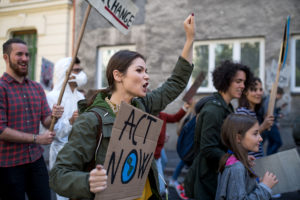
citizens protesting against police and discrimination -- civil rightsThe most important thing to remember is that the First Amendment guarantees every person in America the right to peacefully assemble and protest.

Congress shall make no law respecting an establishment of religion, or prohibiting the free exercise thereof; or abridging the freedom of speech, or of the press; or the right of the people peaceably to assemble, and to petition the government for a redress of grievances. 

The right to protest is valued in our country and has led to many substantial changes over the past 200 years, such as the Civil Rights Act. When outrageous police abuse occurs — such as the killing of George Floyd in Minneapolis or the beating of Rodney King in Los Angeles — that conduct affects us all. Exercising your right to speak up and to protest could foster recognition, awareness, and much needed change in the future.

However, it’s important to remember that the Supreme Court has recognized limits to the exercise of our rights – when they could affect the rights of others. Just like freedom of speech doesn’t provide the right to publicly lie about someone or the right to yell fire in a crowded theater, the right to assemble does not mean that a protester has cart-blanche protection to commit otherwise illegal acts, such as vandalism, and there could be criminal repercussions for those who harm others.

Also, current law permits “reasonable time, place, and manner” restrictions by governments to limit some of the unintended adverse effects of those who gather to speak in local communities. Legal interpretations of what constitutes “reasonable” time, place and manner restrictions can be nuanced, but they usually permit municipal action to do things like restrict protesters from marching down the middle of busy streets or instituting non-discriminatory curfews to curb looting and vandalism. Protesters have more leeway regarding location and time when a protest is spontaneous, such as immediately after a major incident occurs that calls for public outcry, like the events in recent days. However, the protection for spontaneous association will likely be subject to greater “time, place, and manner” restrictions after initial protests erupt and/or after public safety concerns surface.

protest facing off against police -- civil rights

When can the police interfere with protests?

If a protest escalates to include violence and property damage, local law enforcement has the legal authority to intervene to quell that violence or to arrest perpetrators. They may also have the legal authority to stop protests on private property, those organized without a permit, or those that block public rights of way, such as on an interstate or major street.

As to the time or duration of protests, law enforcement can intervene if a curfew has been legally established and police have given you warning, time, and opportunity to safely leave. Police should act only to apply limited restrictions in a non-discriminatory and even-handed manner.

What am I allowed to record at a protest?

There have been a lot of contrary opinions written regarding what citizens can and can’t record, with respect to the police. And while some states have limits on where you can post recordings with audio, the visual part of recordings is protected by the First Amendment and can be posted online and shared.

You have a First Amendment right to record the police while they are performing public duties. As long as you aren’t interfering with or threatening them, and stay a fair distance away from officers performing official functions, the police DO NOT have the legal authority to demand that you stop recording. In fact, it’s always a good idea to record any encounter with the police if you think things might go bad for anyone involved. Phone recordings have been key in prosecuting police misconduct in recent years, especially with the quality of video that most cell phones can produce. As Will Smith said, “Racism isn’t getting worse, it’s getting filmed.”

Also, the police cannot legally demand your phone or confiscate it without a warrant, and those take time to obtain because they have to be signed by a judge. They also don’t have the authority to tell you to delete a photo or video. If you feel a confrontation may occur — especially one involving force — many have suggested complying, handing over the device, and then filing a complaint with Internal Affairs, the Office of the Independent Monitor (in Denver), or legal organizations like the ACLU or with local lawyers. But you absolutely have the right to retain possession of your phone along with any video or photos. If nothing else, quickly send or upload the media to someone before handing over your phone so that it cannot be deleted. The ACLU has developed a smart phone application that – once activated – will record and automatically upload any video taken from that phone to the ACLU for safe-keeping and later review:

https://www.aclu.org/issues/criminal-law-reform/reforming-police/aclu-apps-record-police-conduct

If you don’t like your own photo being taken or publicly shared, you should know that your presence at a public protest means you have given consent for your photo to be taken and potentially used, most commonly by the media. After-all, protests are meant to be matters of public interest. There are a few restrictions, but if you are uncomfortable with your photo showing up on social media or potentially the evening news, you should consider other forms of speech or wearing something that hides your identity.

police tear gas crowds at protest, civil rights

What are the police allowed to do during a protest?

The first job of the police is to protect your right to peacefully assemble — both they and public officials have taken a vow to uphold the Constitution. If you are acting reasonably, within the confines of the law, then they have no authority to act against you or restrain you in any way. However, they are also charged with maintaining order and upholding the law, so if protesters or infiltrators start being violent or causing damage then the police will most likely take action. The concern for all of us is what form that action takes and whether it is proportionate to the public policy and/or legal justifications permitted under the law.

The main priority of police should be to de-escalate violence, but it has been shown time and again that the police often are the cause of violence. For example, if they start dropping tear gas canisters and firing rubber bullets at peaceful protesters before curfew has started, and without any legal and/or legitimate purpose, then they could be found liable for use of excessive force. This is one of the times when it is important to always be recording police on your phone.

What should I do if the police stop me or if I get arrested?

First of all, it’s always good to stay calm. Remember that sometimes the police just want to ask a question and you may not be suspected of doing anything wrong. The law permits police to ask questions without converting the contact into a seizure. Second, get your phone out and start recording. Finally, you always have the right to ask the police if you are being detained and/or free to go. If they indicate you are not being detained or are free to go, just calmly leave — you are under no obligation to speak to them. If they detain you, you have the right to ask why you are being detained.

If you are arrested or detained — whether justified or not — it’s best to remain calm and not resist. If other people are there, ask them to record everything they can. You do not have to speak to the police if you don’t want to — you have the right to remain silent. After you are booked, you will have the right to make a phone call so it’s a good idea to write a few numbers on your arm since your phone will be taken away. And it’s always a good idea to call a lawyer because while that conversation is privileged, the police do have the authority to listen in on calls to friends or family.

What should I do if I feel my rights were violated at a protest?

If you truly feel your rights were violated, the first step is always to gather evidence to support you. You have the right to sue for the violation of your rights and you should contact a civil rights attorney devoted to your rights. 42 U.S.C. Section 1983 of federal law permits those who are violated by official government actors (such as police) to seek redress in federal court. However, police officers are also covered by qualified immunity, which means they are shielded from civil liability if they didn’t break a clearly established law. That is one reason it is so important to record any interaction with the police as many of them are still not required to wear body cameras. Recordings remove much of the grey area of “he said, she said” when courts are charged with determining who is telling the truth. Video doesn’t lie.

We are here to help with protecting your Constitutional right to protest

If you have experienced problems with your civil rights being violated during a protest, please give us a call. We work diligently to protect constitutional rights. For a free, no-obligation consultation with the Civil Rights Litigation Group, contact our Denver CO law firm today at (720) 515-6165 or use our online contact form.

Paid time off and your rights during the coronavirus

woman sneezing at desk, rights to paid time off during coronavirusWith all of the new laws and requirements coming about because of the coronavirus, many people have questions regarding paid time off and their rights to it. What happens if you get sick and your employer won’t give you time off to either recover or quarantine? What happens if a family member gets sick and you need to care for them?

State laws regarding paid time off

As of March, the Colorado Division of Labor enacted the Colorado Health Emergency Leave with Pay Rules (Colorado HELP) to give employees some help, especially with paid time off. Because of these new regulations, companies are now required to provide up to four days of paid medical leave for their employees. This time can be used to self-isolate if you are exhibiting symptoms of Covid-19. The new regulations cover employees in the following industries: leisure and hospitality, retail stores that sell groceries, food and beverage manufacturing, food services, childcare, education (including transportation, food service, and related work), home health care, nursing homes, and community living facilities.

New federal laws

Two new acts passed by Congress — the Families First Coronavirus Response Act and the Emergency Paid Sick Leave Act —also give you rights with regards to paid time off. These new laws require all states, cities, and towns, along with private companies with less than 500 employees, to provide up to 80 hours of paid leave to employees if they are told to self-quarantine or if they have symptoms and are waiting for test results. If this is the case, you should receive your regular rate of pay for those 80 hours. You can also use the time to care for a child if their school or daycare has been closed due to Covid-19 or to care for a family member who is either sick or needs to self-isolate. In this case, the law requires your employer to pay you two-thirds of your regular pay during your time off. The law also prevents your employer from requiring you to use all of your other paid time off, like vacation or personal time, if you get sick or need to care for someone who is.

Paid time off if you need to care for a family member

Sometimes, it’s not you that’s sick but an immediate family member like a spouse or child. If you have worked a year or more, full-time,for a company with more than 50 employees, you can take advantage of the Family Medical Leave Act, or FMLA. This act requires that companies give you up to 12 weeks of unpaid time off to care for a family member and then let you return to your job in the same or an equivalent position. They also have to let you keep your health insurance.

Can I be fired for getting sick?

The FMLA and other federal laws protect employees from being fired for a serious health condition. The Americans with Disabilities Act (ADA) also prohibits companies from discriminating against employees with a disability. In some cases, you could be considered disabled if you have an underlying health condition, such as asthma or diabetes, that could be exacerbated by the Covid-19.

We are here to help with paid time off and other employment issues

If you have experienced problems with your employer not giving you the required paid time off during this epidemic or any other health crisis, please give us a call. We work diligently to protect employee rights. The Civil Rights Litigation Group is dedicated to protecting the rights of employees during the coronavirus outbreak. If you are having issues securing paid time off, we can pursue a lawsuit against your employers, and will fight to get you compensation for your damages. For a free, no-obligation consultation with the Civil Rights Litigation Group, call our Denver CO law firm today at (720) 515-6165 or use our online contact form.

Coronavirus and your employee rights

female employee wearing mask during coronavirus outbreakThe coronavirus pandemic our country is going through right now is unprecedented – people are sick, people are dying, and everyone is scared. Different states are battling the coronavirus in different ways as businesses struggle to survive. Here in Denver, as of March 24, the mayor has declared a state of local disaster, pursuant to C.R.S. § 24-33.5-701, et seq., and ordered all individuals to STAY AT HOME and shelter in place. This means that all non-essential businesses should close, unless they can operate with employees from home and/or with appropriate “social distancing.” In particular:

“All businesses with a facility in Denver, except Essential Businesses as defined below in Section 6, are required to cease all activities at facilities located within Denver, except Minimum Basic Operations, as defined in Section 6. For clarity, businesses may also continue operations consisting exclusively of employees or contractors performing activities at their own residences (e.g., working from home). All Essential Businesses are asked to remain open. To the greatest extent feasible, Essential Businesses shall comply with Social Distancing Requirements as defined in Section 6, below, including by maintaining six-foot social distancing for both employees and members of the public, including, but not limited to, when any customers are standing in line.”

March 22 CDPHE Order.[1]

If your business is one of those that will or can remain open, you may have some questions about your rights. First of all, you should understand that circumstances regarding the pandemic are changing as information becomes available and that this is new to everyone. Congress is expected to pass a bill to help both businesses and their employees, but new laws are likely to come in to effect.

Hopefully, you have a caring employer who is taking all the necessary precautions to keep their employees safe and to help you endure through this trying time. However, you may still have some questions and concerns about your rights and safety during this time.


Can my employer require me go to work during the coronavirus outbreak?

Unless you have a valid disability that qualifies under the Americans with Disabilities Act (ADA), your employer can require you to come in to work. If you have health concerns, the best thing you can do is provide notice by talking to them and communicating regarding your concerns and your particular condition. However, if your business is one that was mandated to close and your employer remains open, and then fires you because you refuse to go to work, you may have a case for wrongful termination in violation of public policy. Before doing anything, you should speak to your employer and communicate that you have good cause not to work because of a medical vulnerability you have and that you fear for your safety. If you make a good faith effort to resolve the situation and your employer still fires you, you can apply for unemployment and look into a wrongful termination lawsuit.


Can my employer require me to work if I need to care for a sick family member?

The Family Medical Leave Act (FMLA)[2] requires employers to provide eligible employees up to 12 workweeks of unpaid leave per year to care for yourself or family members, with continued health benefits. Employers must also allow employees to return to the same job (or one that is equivalent). See the Department of Labor website for all the eligibility requirements and details.


Is my employer required to provide safety equipment against the coronavirus?

There are OSHA (Occupational Safety and Health Administration) laws that protect you. The general duty clause from OSHA requires your employer to provide “a place of employment which (is) free from recognized hazards that are causing or are likely to cause death or serious physical harm to his employees.” Of course, your employer can’t eliminate the coronavirus from your workplace but it should make that environment as safe as reasonably possible. A lot of this will come down to them putting forth a “good faith effort” because safety equipment is in short supply at the moment. So, while a hospital is typically required to provide doctors and nurses with the masks, gowns, and even hazmat suits, a grocery store can get away with providing gloves and hand sanitizer if that is all they are able to get. However, in most cases, they shouldn’t prevent you from using additional safety equipment that you provide so long as it doesn’t interfere with your job.


Can I sue my employer if they require me to work and I get sick?

In most cases, probably not. Simply put, it is very difficult to prove how or where someone caught the coronavirus because, as of now, the virus hasn’t mutated very much. What that means is that most people who are sick in your area will have a very similar strain of the virus, so it’s next to impossible to trace. Remember, the burden of proof is on you to show that you not only caught the virus at work but that it was your employer’s fault.

However, if your employer knowingly puts you in a dangerous situation without required protection, or deliberately didn’t inform employees that they had been exposed, then you may have some recourse. Again, this entire situation is something the country and the courts haven’t dealt with much so there is a lot grey area to navigate. And the burden of proof will be still be on you.


I am Asian, Latino, African American, Caucasian, or a member of another race and my employer is treating me differently

Disparate treatment because of your race continues to be prohibited by Title VII of the Civil Rights Act of 1964 and is absolutely illegal. If you can prove that your employer has singled you out and treated you differently from the other employees —  such as cutting your hours or making you wear a mask when no one else is required to — because of your race you may have a case for discrimination.


If I test positive for the coronavirus, can my employer tell the other employees?

No, your employer is required to maintain your privacy regarding any medical information. However, they can (and should) notify other employees that they may have been exposed to the coronavirus, or that there may otherwise be a health hazard, without disclosing your name.[3]


[1] See https://www.denvergov.org/content/denvergov/en/mayors-office/newsroom/2020/city-s-covid-19-response-update-and-stay-at-home-order.html

[2] The FMLA applies to all public agencies, including local, State, and Federal employers, and local education agencies (schools); and private sector employers who employ 50 or more employees for at least 20 workweeks in the current or preceding calendar year – including joint employers and successors of covered employers. If you are working for business with fewer than 50 employees, they are not required to offer FMLA benefits.

[3] For further legal advice on this issue, consult an attorney knowledgeable in federal and/or state privacy matters. Civil rights attorneys, such as the author of this article, are not experts in privacy law.

Whistleblower protection and employee rights

You may have heard the term “whistleblower,” but may not know what it means. Much like a referee in a sporting event, it’s someone who sees some type of illegal, unethical or other improper conduct by their employer, and “blows the whistle,” or alerts authorities or the press to the actions. And whistleblower protection is your right.

Whistleblower Protection In Denver, CO

Who is a whistleblower?

Whistleblowers can be just about anyone, from a construction worker or foreman to an office clerk, a first responder or agency employee, a manager of any level, or a hospital employee from a janitor or orderly to department head or chief medical officer. The term applies to anyone who calls out improper conduct at work to a higher-level supervisor, a governing agency, the press, or other authority, in either the private or public sector.

Examples of a whistleblower include:

  • A retail employee who becomes aware that another employee or manager is violating company policies, particularly in terms of the company’s funds
  • A nursing home employee who notifies a state regulating agency about patient neglect, abuse, mistreatment or financial exploitation
  • A construction worker who notifies a regulating agency about the lack of safety equipment or procedures on a job site
  • An office worker who notifies a governing agency about funds and/or supplies that are missing or misappropriated
  • A financial services professional who becomes aware of a client’s funds misappropriated by a colleague, “selling away” (selling products not represented by the firm) or convincing clients to purchase investments that are speculative and lead to potential client losses and reports them accordingly

Of course, these are just a few of the ways where someone can be a whistleblower. There can be any number of situations where the term can apply.

Many people may consider a whistleblower a hero. However, those identified don’t always see it that way. When improper conduct is exposed, there is a significant chance that retaliation against the whistleblower is a strong possibility. Fortunately, there are some protections available.

Colorado’s laws for whistleblower protection

The state offers protections for both public-sector and private-sector employees who highlight such actions. Colorado is an at-will employment state, but there are protections for whistleblowers in the case of wrongful termination and other retaliatory measures.

The first is Colorado Revised Statutes Section 24-50.5-103, which protects public employees who disclose information in the public interest, so long as it is true and not confidential. To report retaliation, the employee must file a report within 30 days of the incident.

The second is Colorado Revised Statutes Section 24-114-102, which protects private employees. In this case, the employee must attempt to provide their information to a supervisor or another internal division before providing it to an outside authority or agency. A private employee can also file a civil lawsuit after unlawful termination or other retaliation without first submitting to a formal complaint process. There is a two-year statute of limitations for filing such a lawsuit.

Federal whistleblower protection

The Whistleblower Protection Act of 1989 protects federal employees who expose corruption, waste, and illegal acts related to their employment. The law also protects them from retaliation such as pay cuts, demotions, transfers and terminations after reporting.

The NO FEAR Act of 2002 added training for federal managers and supervisors to discourage retaliation against whistleblowers. It is intended to “improve agency accountability for anti-discrimination and whistleblower laws.”

Sarbanes-Oxley Act (also of 2002) was also added to protect investors after a number of accounting scandals.

You can also file a federal complaint at the Office of Special Counsel’s website.

The SEC

In governing the financial services sector, the Securities and Exchange Commission (SEC) has its own whistleblower program. The SEC’s program also comes with financial incentives.

The agency has awarded over $300 million in awards since the beginning of the program in 2011. Many of these awards have been substantial, and have been awarded to those who uncover illegal or unethical activity in companies that handle investments.

You can learn more about the SEC’s own whistleblower program here.

Contact the Civil Rights Litigation Group in Denver, Colorado

“Blowing the whistle” on wrongdoing at work is a big step. Because of the complexities involved in this kind of action, it’s a good idea to speak with an employment law attorney before you do so. Retaliation is not uncommon, and is also against the law.

The Civil Rights Litigation Group is dedicated to protecting the rights of employee whistleblowers who are targeted with retaliation. If you find yourself fired or otherwise disciplined for whistleblowing, we can pursue lawsuit against you/ employers who have retaliated against employees, and will fight to get you compensation for your damages. For a free, no-obligation consultation with the Civil Rights Litigation Group, call our Denver CO law firm today at (720) 515-6165 or use our online contact form.


Know your ‘symbolic speech’ rights

Examples Of Non-Verbal Freedom Of Speech Rights

The First Amendment is known to protect what we call freedom of speech. It means that everyone has the right to express an opinion and be free from government censorship, regardless of who agrees with it.

But freedom of speech doesn’t just include the spoken word. In fact, freedom of speech and expression can take many non-verbal forms. These are known as symbolic speech, actions that express specific ideas.

What is symbolic speech?

Non-verbal, or symbolic speech, is an action that clearly conveys a specific message to anyone who sees and/or reads it. Symbolic speech can take the form of:

  • Public protests, such as sit-ins and marches
  • Demonstrations
  • Wearing buttons, armbands, or other clothing items (such as t-shirts) that deliver a protest or other specific message
  • Nudity
  • Flag waving
  • Flag burning
  • Burning draft cards

The government must have an important reason and prove to a court that the message isn’t protected speech if they want to punish you. Government disapproval cannot be the reason. But like fighting words, not everything is protected speech.

The limits on symbolic speech

Freedom of speech does not mean that you can say whatever you want without consequences. The fighting words doctrine includes speech or words that intentionally incite violence or cause distress and are not protected. Slander (lying), obscenity, child pornography, and obscene gestures are also not protected as free speech or symbolic speech.

Two examples of symbolic speech

During the Vietnam War, students at two Iowa schools decided to wear black armbands to school as a silent protest to the war. Once the principals discovered the plan, they warned students that anyone wearing the armbands would be suspended. Three students were suspended as a result. Parents of these children sued, and the U.S. District Court sided with the school. The students lost on appeal so they took the case to the Supreme Court.

In Tinker v. Des Moines Independent Community School District, the Court decided that students had the right to symbolic speech at school. However, in this instance, the school was correct in prohibiting them to avoid disrupting learning at the school, and they had the right to do so.

Another famous example of symbolic speech is the case of Texas v. Johnson, in which a man burned an American flag outside of the 1984 Republican National Convention in Dallas, Texas. He chose to burn it there, where Ronald Reagan was about to receive the nomination for president, as a protest. He soaked a flag in kerosene and set it on fire. He was immediately arrested for violating a Texas state law prohibiting the burning or desecration of an American flag. He served a year in jail and paid a fine.

The Texas Court of Criminal Appeals is the state’s highest appeals court for criminal cases. They argued that symbolic speech was protected by the First Amendment, and overturned his conviction. This led the way to a Supreme Court hearing the case in June 1989 that produced a controversial 5-4 ruling that burning the flag is protected symbolic speech. The justices called it a bedrock principle that the government could not just prohibit an expression of speech just because society finds it offensive.

The First Amendment protects your right to freedom of speech

If someone has threatened your right to free or symbolic speech, you can fight back. Call the Civil Rights Litigation Group at (720) 515-6165, or use our online contact form, to schedule your free consultation with us today. We understand civil rights cases, and can help you protect your rights.

Call us at 720-515-6165


Related posts:

Free speech and the First Amendment

Hate speech, the First Amendment and social media posts — what you should know

Wrongful death lawsuits in Colorado

Who Can File A Wrongful Death Lawsuit In Denver, CO?

A car accident. A fatal slip-and-fall. A preventable accident at a workplace. Medical mistakes or preventable hospital-borne infections. A crime that didn’t have to happen if adequate lighting or security were available. A badly made or designed product that causes a death, including medical devices. All of these can lead to a wrongful death, or the unnecessary death of an individual through negligence. This can leave grieving families with serious financial difficulties if the deceased is the family’s provider.

Colorado allows wrongful death suits to be filed on behalf of a deceased person, for the compensation he or she might have been able to recover as if they were still alive.

Several factors are involved when a person dies at the hands of another. Depending on the circumstances, it may be possible to recover damages from the responsible party through a lawsuit, known as “wrongful death.”

The permitted parties

In Colorado, it’s possible to recover damages in a wrongful death lawsuit, but there are limits on who can file one, depending on the individual’s status. The Colorado Wrongful Death Act details these individuals:

  • For the first year after the death, only the deceased’s spouse may file
  • If the spouse does not file after the first year (or there isn’t one), any surviving children can file, as well as the spouse
  • If the decedent has no surviving spouse and/or children, the deceased’s parents can file
  • Anyone who would have been a beneficiary and lost an inheritance as a result of the wrongful death can file
  • A representative of the deceased’s estate may also file

Relatives such as siblings, nieces and nephews aren’t permitted to file a lawsuit unless they were previously a designated beneficiary or would have been a beneficiary.

Proving wrongful death

If the wrongful death is the result of a criminal act, there will be two parts to the equation: a criminal case and a civil case. The criminal case is brought by the state, and the civil case is brought by a spouse, children, parents, or other qualified individual.

In order to prove that the individual’s negligence is responsible for the death, you’ll need to prove it with “preponderance of evidence.” This demonstrates that the defendant is more than likely than not guilty of negligence that caused the wrongful death.

Available compensation

Once a death is proven to be wrongful or negligent, the plaintiff can request:

  • Medical, expenses, including hospital and emergency room charges.
  • Funeral and burial expenses
  • Lost wages, future wages, any financial benefits or anticipated inheritances (such as life insurance policy payouts)
  • Punitive (“punishment”) damages to make an example of the defendant and discourage other individuals from doing the same thing
  • Loss of companionship from the deceased person
  • Any other accident/injury related expenses

Qualified parties have a two-year statute of limitations on filing a wrongful death lawsuit. That’s why it’s important to find a personal injury attorney who understands wrongful death laws to have the best possible outcome, and begin working with them as soon as possible.

Wrongful death attorney in Denver, Colorado

The death of a loved one is always difficult. But knowing that someone else’s negligence caused a needless death makes it even worse.

If you believe your loved one’s death was negligent as well as preventable, call the Civil Rights Litigation Group at (720) 515-6165, or use our online contact form, to schedule your free consultation with us today.


Dealing with disability discrimination in the workplace

The Americans with Disabilities Act of 1990 prohibits disability discrimination against an individual based on their disability. The idea was to ensure that Americans with disabilities would have the same rights as everyone else. This includes all aspects of employment, including hiring, firing, promotions, and job duties, and applies to businesses with 15 or more employees.

Disability Discrimination In Denver, CO?

The Colorado Civil Rights Act further refines the rights of the disabled, prohibiting discrimination, and applies to businesses with two or more employees.

Reasonable accommodation

If you find yourself disabled while working, you can notify your employer of your disability, and request a reasonable accommodation. The company is required under the ADA to provide reasonable accommodation, as long as it does not impose an undue hardship on the employer. Otherwise, they are guilty of disability discrimination.

This reasonable accommodation would be provided to an otherwise qualified disabled employee, and would enable him or her to enjoy the same benefits and have the same level of performance as a non-disabled employee. The accommodations may not be exactly what the employee requested, but may be enough for the employee to continue working at a similar level than before.

These accommodations can include:

  • Changing the employee’s work schedule
  • Restructuring of the employee’s job
  • Increasing accessibility to disabled employees
  • Reassigning the employee to a currently vacant position
  • Providing qualified readers and/or interpreters
  • Modifying or obtaining equipment or devices
  • Modifying or obtaining policies, training manuals, or exams

Once the employee requests an accommodation, the employer’s duty to provide one is initiated. Both the worker and the employer should have a conversation on exactly what the employee needs to continue working.

When the employer refuses to address disability discrimination

Because the ADA requires an employer to provide a reasonable accommodation to a qualified individual with a disability, refusing to accommodate a disabled employee may be able to create a claim for disability discrimination under the ADA. The accommodation is requested so that the disabled individual will be able to continue his or her employment as if they were not disabled, or as closely as they can.

The first step is to try to resolve the issue internally, within the company. Having a discussion with your supervisor or manager may be all it takes to resolve the issue. If your direct supervisor refuses, or is unaware of the requirement, a conversation with HR may be your next step. If that doesn’t help, you may have to file an internal complaint within the company. This will give the company a chance to remedy the problem. If they don’t, and you do end up filing suit, it will go a long way in demonstrating to the court that you gave the company adequate opportunity to correct the problem and provide an accommodation.

Should a company complaint not resolve the problem, the first step is to file a discrimination charge with the EEOC in order to preserve your right to file a lawsuit later. Once the EEOC has completed its investigation, it will issue a right-to-sue letter. You will then be cleared to file your lawsuit.

The EEOC has a web page with some facts about the ADA.

Your Denver disability discrimination attorney

Dealing with a disability is difficult enough. Working for an employer who doesn’t respect you as a valued member of the company because of your disability can make things even worse. You don’t have to be a victim against ridiculous discrimination tactics.

Call the Civil Rights Litigation Group at (720) 515-6165, or use our online contact form, to schedule your free consultation with us today. We’ll aggressively fight for you in court and make sure your rights are protected and you are treated fairly.

Hate speech, the First Amendment and social media posts — what you should know

Last year, we explained how the First Amendment affects bloggers. The laws and decisions that go into protecting bloggers may also affect rights regarding the first amendment and social media postings.

You may have encountered virulent arguments on social media about topics that should not have provoked that type of reaction. At some point, you or someone else may be accused of and reported for promoting “hate speech.” Maybe you just stated an opinion, and someone shot back an inflammatory comment. Does First Amendment cover you?

First Amendment Rights, Hate Speech And Social Media Posts—What You Should Know

Defining hate speech

“Hate speech” isn’t a legal term, but is one used to describe speech that’s intended to attack or demean another individual or group. This type of speech is usually based on characteristics that are illegal to use for discrimination, such as race, sex, religion, nationality, sexual orientation, or age.

Hate speech has also come to mean any type of comment that another individual does not agree with, even if it’s not specifically insulting or demeaning.

Simply hurling insults at someone is offensive, but not against the law. But hate crimes, targeting someone because of the above characteristics, are a matter of criminal law, not civil.

What is social media?

Websites, apps and other forms of electronic communication allow people to communicate and share content in real time. Most people are familiar with Facebook, Twitter, Instagram, Pinterest, YouTube, and similar websites, as well as professional networking site Linkedin. Depending on the platform, you can disseminate any type of information to your friends, private groups or the user community at large.

When a post, picture, or other piece of content “goes viral,” it’s shared widely and occasionally appears in broadcast media. This can be anything from a cute cat video to a vicious diatribe targeting a group of individuals, and anything in between. With a combined social media user community in the billions, one share can put your post in front of the entire world in the blink of an eye.

While many social media users share pictures of whatever they’re doing, eating, drinking, or watching, hate groups use the same medium to disseminate their own messages. This is where the First Amendment and social media come into play.

The difference between the First Amendment and social media

Hate groups from all over the world have routinely used social media to spread their message, recruiting and bringing more people into their fold. The recent attack on a German synagogue was live-streamed on Twitch by the shooter wearing a helmet camera. But it wasn’t the first time social media has been used to broadcast such an event.

While the First Amendment protects your right to say what’s on your mind in a public forum, social media is a different matter. The platforms might be a public forum, but are privately owned by companies that issue their own policies for what you can and can’t say there.

For instance: standing in the public square and shouting insults will upset people of that you’re targeting, but the comments are constitutionally protected. However, threats of and encouraging violence, the so-called “fighting words,” are not constitutionally protected, and may also get you arrested.

Platform policies

Making the same comments on social media may be First Amendment protected, but may violate the platform’s “community standards.” This means that although your comments are constitutionally protected, the platform itself does not have to allow you to say it on their “premises.”

It’s akin to saying something insulting to someone in their own home. You can say it on the sidewalk, but they don’t have to allow you in to say it in the privacy of their living room. By the same token, social media companies have the right to tell you that you can’t say that on their privately owned platform. Users are allowed to “flag” comments that they believe to be hate speech, but flags are also used in retaliation for benign comments that someone simply disagreed with. This makes it more difficult to find true hate speech and combat it.

While social media companies have broad powers to restrict hate speech in their platforms, their capacity is lacking to catch and control everything that violates their community standards.

Have you been accused of hate speech?

Call the Civil Rights Litigation Group at (720) 515-6165, or use our online contact form, to schedule your free consultation with us today. As a civil rights defense firm, we will work to ensure that your civil rights are defended and protected.

Call Us

720-515-6165

Fax: 720-465-1975

Contact Us

Address

Civil Rights Litigation Group

1543 Champa St., Suite #400

Denver, CO 80202