Mar 3, 2026 | Uncategorized, Constitutional Rights, First Amendment, Police Misconduct
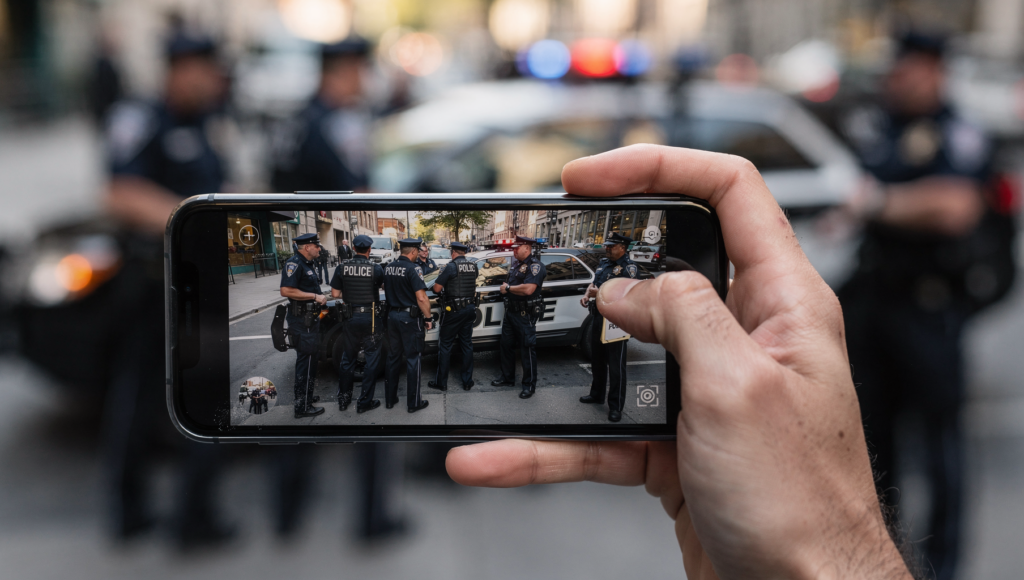 One of the most powerful tools for protecting civil rights today is something most people already carry: a phone camera. Before cell phone video was common, many encounters with police turned into one person’s word against another’s. In those situations, courts often favored police accounts.
Today, video changes that balance. Recording the police in Colorado can preserve evidence, protect your rights, and provide clarity when accounts differ. When done lawfully, phone video has become one of the most effective civil rights tools available to the public.
Is recording the police legal in Colorado?
The short answer is yes. In most situations, so long as you do not interfere with police duties, you can record them.
Under the First Amendment, people generally have the right to record police officers performing their duties in public places. In 2022, the Tenth Circuit Court of Appeals (Irizarry v. Yehia) clearly affirmed that filming police in public is constitutionally protected when done without obstruction.
This protection exists not only for individuals, but for the public’s right to observe how public officials carry out their responsibilities.
Audio recording and Colorado’s one-party consent law
Colorado is a one-party consent state, meaning you can legally record audio if you are a participant in the conversation.
When police officers are speaking directly to you, or speaking openly in public where there is no reasonable expectation of privacy, audio recording is typically lawful. Keeping your phone visible while recording helps avoid misunderstandings and reduces the risk of confrontation.
Colorado laws that support police accountability
Colorado law strongly favors transparency and accountability in policing.
SB20-217, passed in 2020, allows people to bring civil rights claims under Colorado law when law enforcement officers violate constitutional rights. The law also limits certain immunity defenses and requires most police departments to use body-worn cameras. Additionally, Colorado law also requires the preservation and release of body-camera footage in many serious incidents.
While SB20-217 does not directly regulate civilian recordings, it reflects Colorado’s broader commitment to documentation, accountability, and public oversight.
Why recording the police matters
Phone video has repeatedly changed the outcome of civil rights cases.
In 2020, bystanders’ video of George Floyd’s death contradicted early police reports and became central evidence in the criminal case that resulted in a conviction the following year.
In Colorado, video evidence has played a similar role. Recordings related to the death of Elijah McClain in 2019 exposed inconsistencies between official statements and what occurred on the scene. That evidence contributed to criminal charges and sweeping reforms.
In Loveland, Colorado, body-camera footage from 2020 showed officers using excessive force against Karen Garner, directly contradicting written police reports. The video led to criminal charges, civil settlements, and a federal investigation.
Without video, many of these cases might never have moved forward, or resulted in convictions and reforms.
When you can record police in Colorado
You generally have the right to record police in Colorado when officers are in a public place or on your private property while performing their duties.
Police officers performing official duties in public have no reasonable expectation of privacy. However, you must not interfere with their work. Orders to move must be tied to safety or legitimate law enforcement needs, not simply to stop you from recording.
Best practices for recording the police safely and legally
If you choose to record the police, keep these things in mind:
- Stay calm, quiet, and respectful.
- Keep a safe distance and do not interfere.
- Keep your phone visible while recording.
- If asked to move for safety reasons, comply and continue recording.
- Police generally cannot search or delete your phone without a warrant.
- You are not required to unlock your phone or share your password.
If you believe your phone may be seized, send the video to a trusted person immediately. It’s wise to avoid posting the video online before speaking with an attorney.
What to do if your rights are violated while recording the police
If police retaliate against you for recording, unlawfully detain you, seize your phone, or otherwise violate your rights, it is important to speak with an attorney experienced in civil rights cases.
The Civil Rights Litigation Firm handles cases involving police misconduct and constitutional violations. We understand how video evidence fits into these cases and how Colorado law protects your right to record police.
Call 720-515-6165 for a free consultation.
Feb 17, 2024 | Uncategorized, Police Misconduct
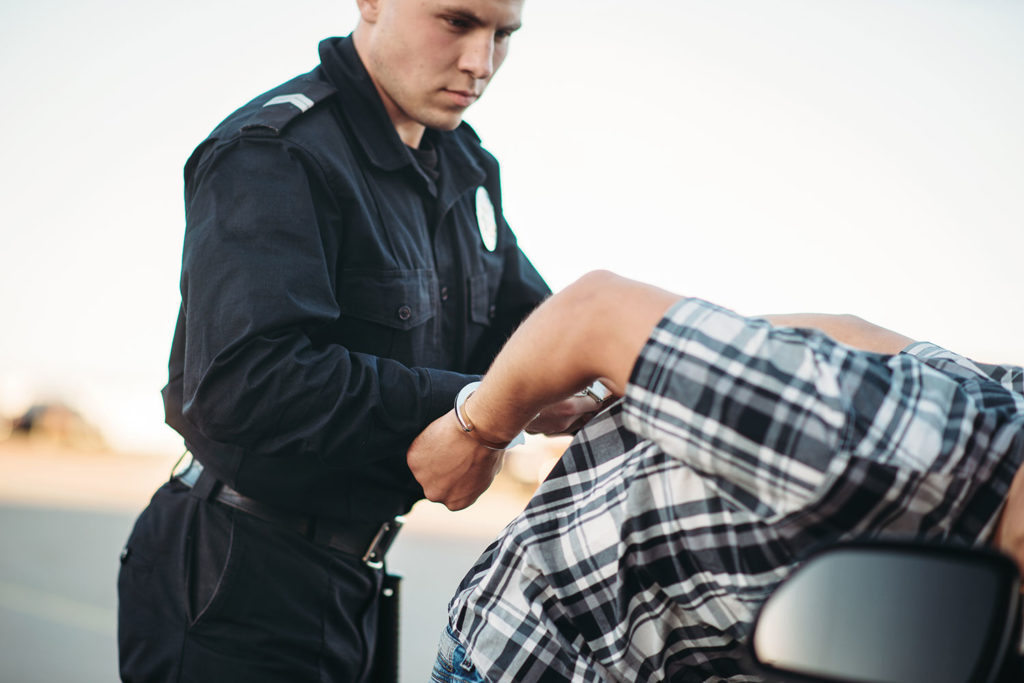 Most police officers exercise restraint when handling members of the general public, but there are times when a situation gets out of hand and citizens get hurt. The law allows the police some flexibility when dealing with or handling an uncooperative individual. Deadly or excessive force can be used if the officer feels he or she is being threatened (i.e., someone pointing a gun at them). But if physical force is unwarranted, it may be considered excessive force, and a violation of one’s civil rights.
Is it excessive force?
The police typically have qualified immunity involving arrest so that concerns of legal action don’t interfere with their ability to do their jobs. (However, those laws have changed in Colorado and police are now required to wear cameras and don’t always have immunity.) Police are allowed to use reasonable force when handling a combative individual, but only to the point of subduing the person for arrest. Legal protections for citizens are available if force becomes excessive or unreasonable. Section 1983 of the Civil Rights Act of 1871 forbids the police to restrict an individual of their civil rights under the Fourth Amendment of the Constitution.
Excessive force, as defined, is when a police officer is aggressive, forceful, and possibly threatens bodily harm when it’s unnecessary. For instance, if someone has cooperated with the police, either at a traffic stop or during an arrest (i.e., handcuffed and compliant), physical force or a weapon wouldn’t be necessary to restrain the individual. Continuing to physically subdue the individual after he or she has complied may constitute excessive force, particularly if the end result was severe injury or death.
What do you do if you are the victim of excessive force?
If you are the victim of excessive force, don’t answer any questions that aren’t required (i.e., like your name). Don’t speak unless absolutely necessary, such as asking for an attorney. If you have injuries, request medical attention immediately. Also, request that photos be taken of your injuries and included in the report. During all of this, don’t yell, become combative, threaten to sue, or say anything else about civil rights. Use your right to remain silent, because what you say really will be used against you later.
Gather evidence and build your case
You will need to prove your case of excessive force with facts and evidence, and you need to work quickly, so that none of this is lost or possibly destroyed.
1. Immediately create a written record of the event. Document everything, including day, time, circumstances, witnesses, and anyone who was with you. Don’t worry about formatting — you’re just documenting and organizing everything, and putting together a timeline to establish facts. Once you’re in court, you will be required to tell your story, clearly and exactly. Written and coherent documentation of the events will help you remember the details of your case.
2. Gather physical evidence. Pictures, video, a police report or citation, medical records (if required), any damaged property (i.e., torn clothes or damaged shoes) and anything else that’s relevant is evidence.
a. If you were injured, take pictures of your injuries and save them in a safe place (i.e., online photo storage, not just on your phone or hard drive)
b. Take pictures of any damaged personal property, and put the items away for safe keeping until they are needed.
3. Gather witnesses’ contact information. Witnesses who can verify and validate your story are crucial. An attorney may request a signed witness statement from them detailing what they saw. You need to document these facts as quickly as possible. Get copies of any videos that witnesses may have taken of the incident.
4. Take care of yourself first. If you were denied medical care in custody, go to the hospital and get checked out. Be sure to get copies of all your medial records. If you were charged with a crime, you’ll also need to find a defense attorney and take care of it. Document everything, including time off work, legal fees and other details.
What if I witness police using excessive force against another individual?
If you are a witness to police using excessive force, immediately document what you see, in as much detail as you can. Write down the time, date, place, and names if you can get them, along with any other relevant details you can remember. If you can take pictures or video, do so, and save them somewhere. Recalling the incident and going over it helps you remember specific details. You may be called upon to give testimony later, and a written account will go a long way in helping you to remember the details correctly.
Protect your civil rights in Denver
What can you do if you’re the victim of excessive force? You need an attorney who is knowledgeable about the laws and how they apply to the police. The Civil Rights Litigation Group has handled many of these kinds of cases and can help you. Contact the Civil Rights Litigation Group at (720) 515-6165 today for a free consultation.
Call us at at (720) 515-6165
Related posts:
Police accountability improving in Colorado
Record the police and protect your rights
Oct 20, 2020 | Uncategorized, Civil Rights Law, Constitutional Rights, Discrimination
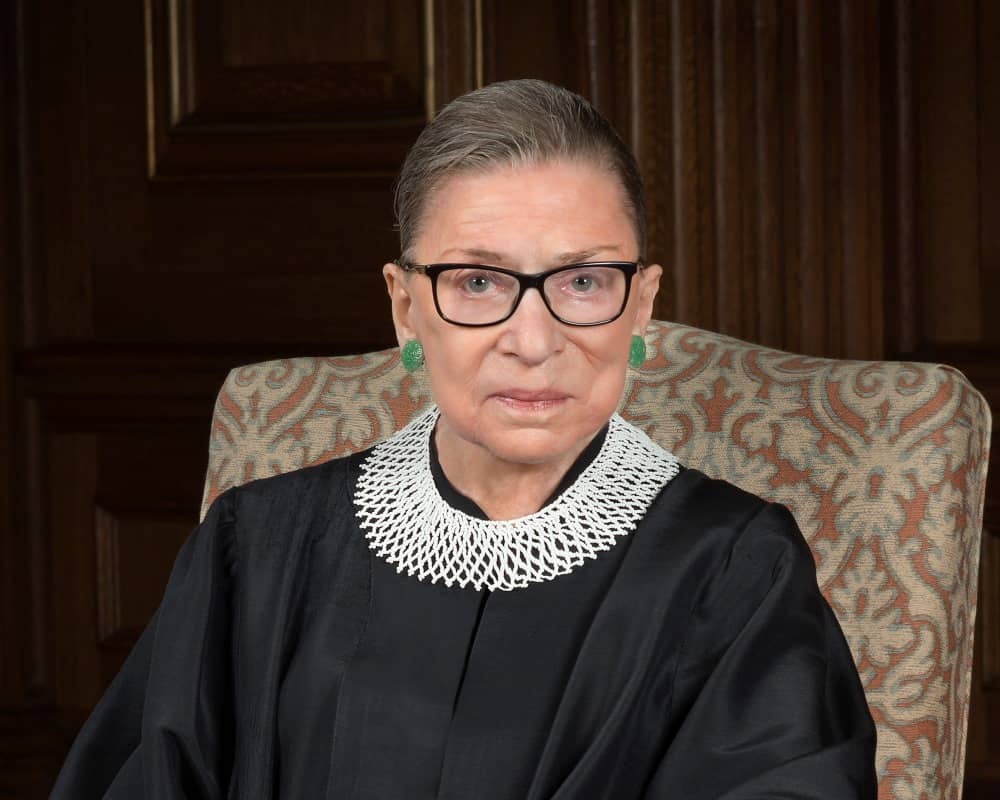 When Associate Justice Ruth Bader Ginsberg passed away last month, she left an impressive legal legacy in her fight for civil rights. Throughout her career — both as an attorney and a judge — she fought everyone to have equal protection under the law.
Civil rights and the Supreme court
Before becoming a member of the Supreme Court, she won five cases before them based on the equal protection clause of the 14th Amendment — specifically the section that guarantees all citizens of the U.S “equal protection of the laws.” Early in her career, Ginsberg worked with the ACLU and led their campaign for gender equality, arguing more than 300 gender discrimination cases. Before her, the amendment was primarily used to argue for racial equality, but she successfully used it to fight for gender equality. She carefully chose cases that would highlight the inequality in how men and women were treated. She found success by taking on cases where men were the ones suffering discrimination.
In 1971, she argued in Reed v. Reed that an Idaho law stating that “males must be preferred to females” when determining the administrator of an estate was a direct violation of the 14th Amendment. The reasoning was that men were better at math. The Supreme Court unanimously agreed that the law was wrong.
In 1973, she won Frontiero v. Richardson, where her client was the husband of a female Air Force officer who was denied spousal death benefits because women were not considered the primary economic providers for their families.
Again, in 1975, in Weinberger v. Weisenfeld, she sued for a male client who had been denied Social Security survivor benefits because the agency assumed that men wouldn’t need them because they earned more money that their wives ever did. By arguing that gender discrimination hurts men as well as women, she was able to use the 14th Amendment to gain more equal rights for women. Her wins also discouraged state legislatures from writing any new laws that drew distinctions based on gender.
Using the 14th Amendment for other types of civil rights cases
After Ginsberg used the 14th Amendment to argue non-race-based discrimination cases, it opened the doors for other lawyers to use it civil rights cases for the LGBTQ community. In 1996, it was used in Romer v. Evans to overturn Colorado’s infamous Amendment 2 that prohibited LGBTQ citizens from claiming discrimination.
In 2015, it was used in the landmark Obergefell v. Hodges case that required all states to recognize same-sex marriages that were performed in other states.
Fighting for civil rights on the Supreme Court
Once she was appointed to the Supreme Court, Ginsberg continued her fight for gender equality and civil rights. In United States v. Virginia, she wrote the majority opinion that struck down the admissions policy at the Virginia Military Institute. Once again using the 14th Amendment, she argued that a state-run institution could not use gender as a basis for denying women the opportunity to attend the school.
In addition to gender equality cases, she also wrote opinions about prisoner rights. In Cutter v. Wilkinson, she argued in favor of prisoners’ religious rights. And before she was on the Supreme Court, she would have all her law clerks visit prisons so they better understood what was at stake in the cases they assisted her with.
While not all of her opinions, cases and writings are considered perfectly in line with promoting civil rights, the sum of her life’s work absolutely shows the impact she had in arguing that the law should treat everyone equally. Her actions both as an attorney and a judge will be felt for generations to come.
Additional posts about civil rights and discrimination
Sexist language and subtle discrimination
Dealing with disability discrimination in the workplace
Is there such a thing as pregnancy discrimination in the workplace?
Discrimination in Denver
Your Denver civil rights attorney
If you believe your civil rights have been violated, whether through police misconduct or discrimination, our civil rights attorneys can help you. Call the Civil Rights Litigation Group at 720-515-6165 or use our online contact form. Schedule your free consultation with a Denver discrimination attorney today.
Call us at 720-515-6165