





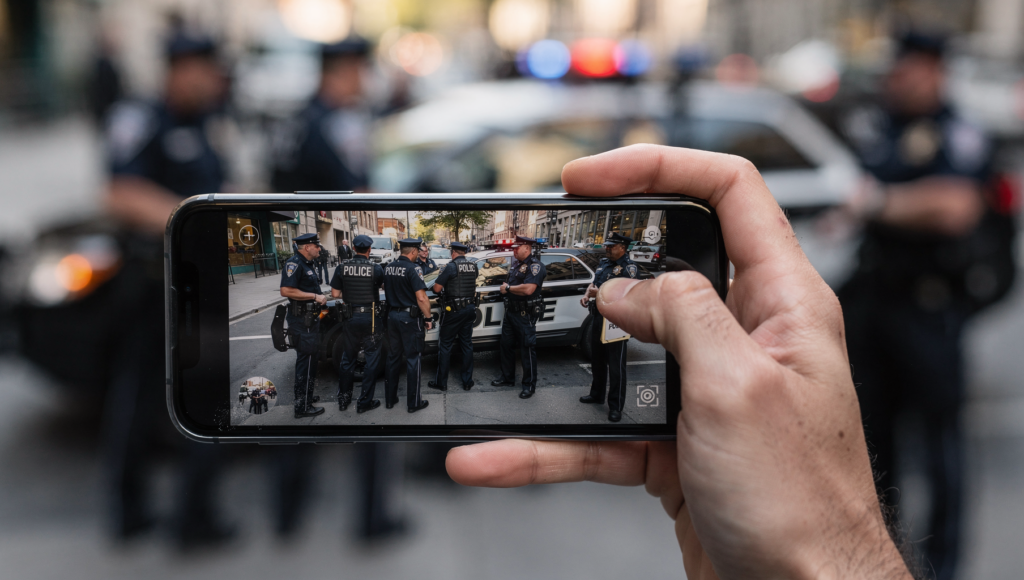
 One of the most powerful tools for protecting civil rights today is something most people already carry: a phone camera. Before cell phone video was common, many encounters with police turned into one person’s word against another’s. In those situations, courts often favored police accounts.
Today, video changes that balance. Recording the police in Colorado can preserve evidence, protect your rights, and provide clarity when accounts differ. When done lawfully, phone video has become one of the most effective civil rights tools available to the public.
Is recording the police legal in Colorado?
The short answer is yes. In most situations, so long as you do not interfere with police duties, you can record them.
Under the First Amendment, people generally have the right to record police officers performing their duties in public places. In 2022, the Tenth Circuit Court of Appeals (Irizarry v. Yehia) clearly affirmed that filming police in public is constitutionally protected when done without obstruction.
This protection exists not only for individuals, but for the public’s right to observe how public officials carry out their responsibilities.
Audio recording and Colorado’s one-party consent law
Colorado is a one-party consent state, meaning you can legally record audio if you are a participant in the conversation.
When police officers are speaking directly to you, or speaking openly in public where there is no reasonable expectation of privacy, audio recording is typically lawful. Keeping your phone visible while recording helps avoid misunderstandings and reduces the risk of confrontation.
Colorado laws that support police accountability
Colorado law strongly favors transparency and accountability in policing.
SB20-217, passed in 2020, allows people to bring civil rights claims under Colorado law when law enforcement officers violate constitutional rights. The law also limits certain immunity defenses and requires most police departments to use body-worn cameras. Additionally, Colorado law also requires the preservation and release of body-camera footage in many serious incidents.
While SB20-217 does not directly regulate civilian recordings, it reflects Colorado’s broader commitment to documentation, accountability, and public oversight.
Why recording the police matters
Phone video has repeatedly changed the outcome of civil rights cases.
In 2020, bystanders’ video of George Floyd’s death contradicted early police reports and became central evidence in the criminal case that resulted in a conviction the following year.
In Colorado, video evidence has played a similar role. Recordings related to the death of Elijah McClain in 2019 exposed inconsistencies between official statements and what occurred on the scene. That evidence contributed to criminal charges and sweeping reforms.
In Loveland, Colorado, body-camera footage from 2020 showed officers using excessive force against Karen Garner, directly contradicting written police reports. The video led to criminal charges, civil settlements, and a federal investigation.
Without video, many of these cases might never have moved forward, or resulted in convictions and reforms.
When you can record police in Colorado
You generally have the right to record police in Colorado when officers are in a public place or on your private property while performing their duties.
Police officers performing official duties in public have no reasonable expectation of privacy. However, you must not interfere with their work. Orders to move must be tied to safety or legitimate law enforcement needs, not simply to stop you from recording.
Best practices for recording the police safely and legally
If you choose to record the police, keep these things in mind:
- Stay calm, quiet, and respectful.
- Keep a safe distance and do not interfere.
- Keep your phone visible while recording.
- If asked to move for safety reasons, comply and continue recording.
- Police generally cannot search or delete your phone without a warrant.
- You are not required to unlock your phone or share your password.
If you believe your phone may be seized, send the video to a trusted person immediately. It’s wise to avoid posting the video online before speaking with an attorney.
What to do if your rights are violated while recording the police
If police retaliate against you for recording, unlawfully detain you, seize your phone, or otherwise violate your rights, it is important to speak with an attorney experienced in civil rights cases.
The Civil Rights Litigation Firm handles cases involving police misconduct and constitutional violations. We understand how video evidence fits into these cases and how Colorado law protects your right to record police.